Driveways in the New Orleans area face a tough combination: expansive clay underneath, heavy rain, intense summer heat and vehicles that get heavier every year. It is no surprise that cracked and sunken driveways are a common sight around Metairie and Kenner.
A long-lasting driveway is not a matter of luck. It comes from a series of decisions about the base, the slab and the way the concrete is finished and cured. This guide explains each one. Whether you are replacing a cracked driveway or pouring one for a new home, the same principles apply. Whether you are replacing a cracked driveway or pouring one for a new home, the same principles apply.
Everything starts with the base
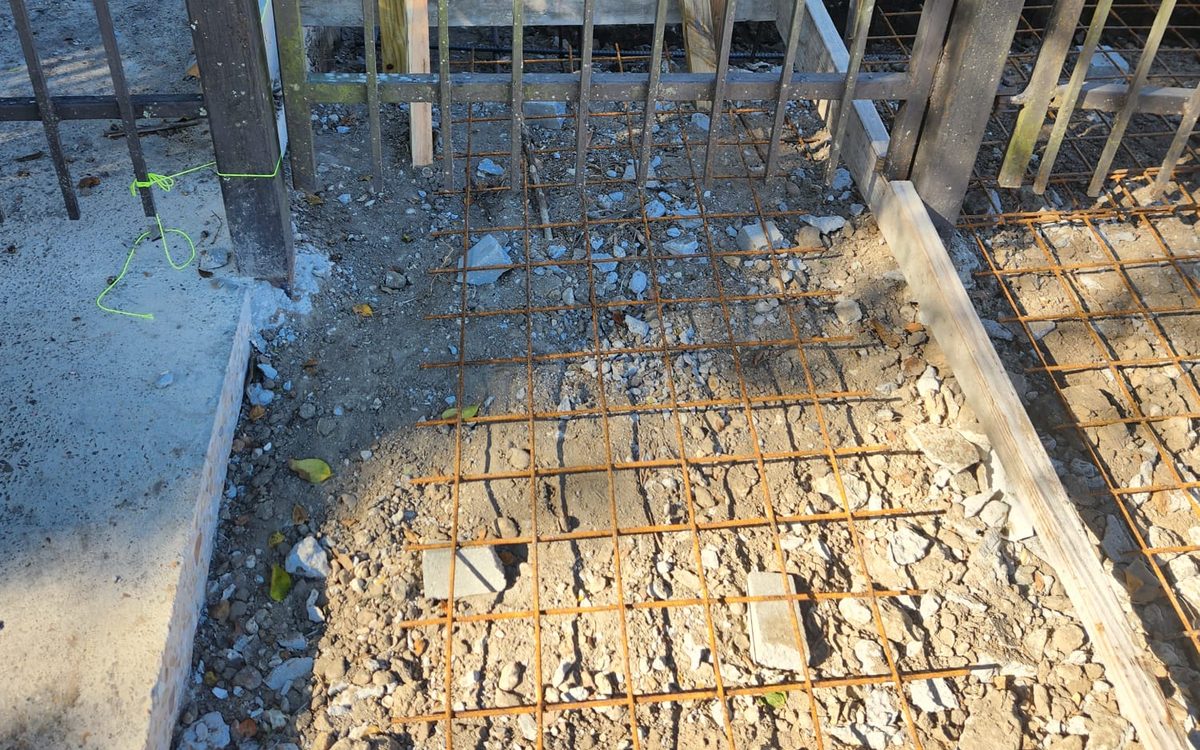
Concrete is strong in compression but relies on uniform support from below. When the soil under a slab is soft in one place and firm in another, the slab bridges the soft spot until it cracks. Removing organic material, excavating to the proper depth and compacting a layer of suitable base material gives the slab even support.
Grading is part of base preparation. The finished driveway should slope so water runs off toward the street or a drainage area, never back toward the house or the garage.
Thickness and reinforcement
Residential driveways are commonly poured about four inches thick, with thicker areas where heavy vehicles, trailers or delivery trucks will travel. Thickening the edges and the approach to the street adds strength where loads concentrate.
Reinforcement, whether steel rebar, wire mesh or fibers, does not prevent cracks, but it helps hold cracked sections together and limits how far they spread. Steel only works when it sits in the middle of the slab, so it needs to be supported on chairs rather than lying on the ground.
Why thicker is not always the answer
Extra thickness cannot make up for a poor base. A well-supported four-inch slab usually outperforms a thicker slab poured on soft soil.
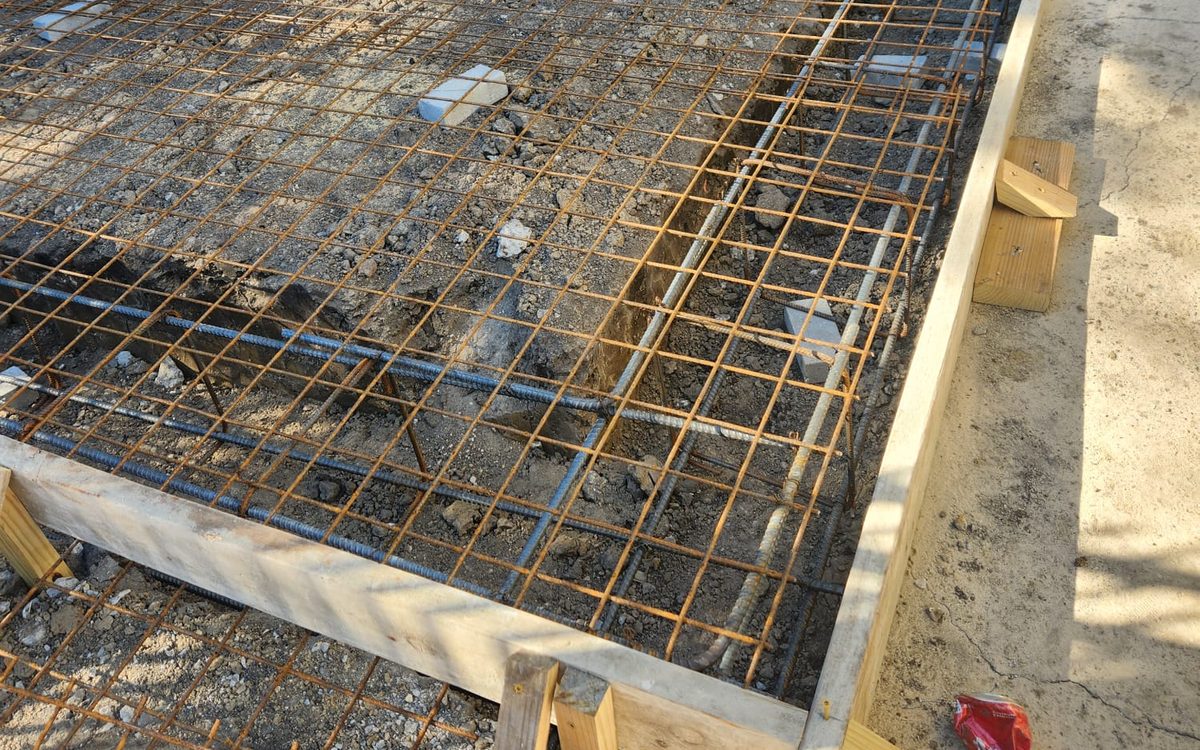
Joints that control cracking
All concrete shrinks as it cures. Control joints are deliberate weak lines cut or tooled into the slab so that shrinkage cracks form there, in a straight line, instead of randomly. Joint spacing depends on slab thickness and shape, and long narrow sections need joints more often.
Expansion or isolation joints separate the driveway from the garage slab, the house and the sidewalk so each can move independently.
Finishing and curing
A broom finish gives traction for rainy days, which is why it is the standard for driveways. Decorative finishes such as exposed aggregate look great on patios and walkways and can be used on driveways with the right mix.
Curing is the step most often rushed. In hot weather, the surface can dry before the concrete has gained strength, leading to dusting, scaling and surface cracks. Keeping the slab moist or applying a curing compound helps it reach its intended strength.
Giving it time
Stay off a new driveway with vehicles for about a week, and longer for heavy loads. Concrete continues gaining strength for weeks after the pour.
Timing the pour around Louisiana weather
Weather affects concrete from the moment it leaves the truck. Heavy rain can damage a fresh surface, and intense heat speeds up setting, giving the crew less time to finish properly. Experienced contractors watch the forecast closely and may schedule pours early in the day during summer.
If rain threatens after a pour, covering the slab helps protect the surface. In very hot conditions, measures such as dampening the base before placement and starting the curing process promptly reduce the risk of surface cracking.
Repair or replace?
A few narrow cracks in an otherwise level driveway can usually be sealed. Sections that have sunk, tilted or broken into pieces are better replaced, and it is often possible to replace only the damaged panels between joints rather than the entire driveway.
When most of the driveway has failed, or when drainage needs to be redesigned, full replacement gives you the chance to correct the base and the slope. A site visit can show which option offers the better long-term value for your property.
Caring for your driveway
Keep gutters and downspouts directed away from the driveway edges so water does not wash out the soil beneath. Seal visible cracks to slow water infiltration. A penetrating sealer every few years can help protect the surface from stains and moisture.
If sections have settled or heaved significantly, replacing those panels is often the most durable fix.
Timing the pour around Louisiana weather
Weather affects concrete from the moment it leaves the truck. Heavy rain can damage a fresh surface, and intense heat speeds up setting, giving the crew less time to finish properly. Experienced contractors watch the forecast closely and may schedule pours early in the day during summer.
If rain threatens after a pour, covering the slab helps protect the surface. In very hot conditions, measures such as dampening the base before placement and starting the curing process promptly reduce the risk of surface cracking.
Repair or replace?
A few narrow cracks in an otherwise level driveway can usually be sealed. Sections that have sunk, tilted or broken into pieces are better replaced, and it is often possible to replace only the damaged panels between joints rather than the entire driveway.
When most of the driveway has failed, or when drainage needs to be redesigned, full replacement gives you the chance to correct the base and the slope. A site visit can show which option offers the better long-term value for your property.
The bottom line
A driveway that lasts on Louisiana clay is built from the ground up: a compacted base, the right thickness, reinforcement in the right place, well-planned joints and patient curing. Ask any contractor to describe each of those steps before you sign, and you will know a great deal about how your driveway will look in ten years.
The bottom line
A driveway that lasts on Louisiana clay is built from the ground up: a compacted base, the right thickness, reinforcement in the right place, well-planned joints and patient curing. Ask any contractor to describe each of those steps before you sign, and you will know a great deal about how your driveway will look in ten years.
Planning work like this in Metairie, Kenner or New Orleans? Learn about our concrete work, foundations services or request an estimate.
Frequently asked questions
Some cracking at control joints is normal. Random cracks often trace back to an uneven base, missing or widely spaced joints, or concrete that dried too quickly.
Concrete is usually less expensive and lower maintenance. Pavers offer design flexibility and individual units can be reset if the ground moves. Both need a good base.
Thin overlays can improve appearance, but they tend to crack again over existing problems. Resurfacing works best on slabs that are structurally sound.
A penetrating sealer can help resist stains and moisture. Wait until the concrete has cured, then reapply every few years as recommended by the product manufacturer.
A penetrating sealer can help resist stains and moisture. Wait until the concrete has cured, then reapply every few years as recommended by the product manufacturer.
Related services
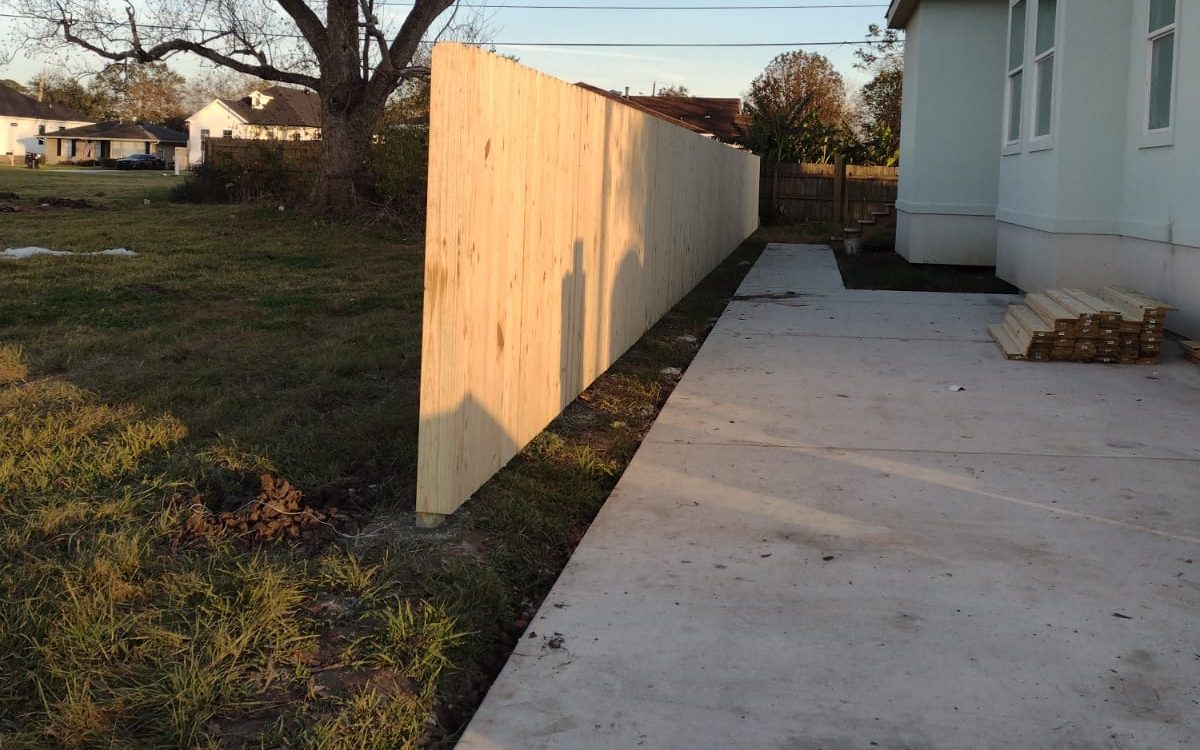
Concrete Work
Driveways, patios, sidewalks and slabs with proper base preparation, planned drainage and controlled joints.
View concrete work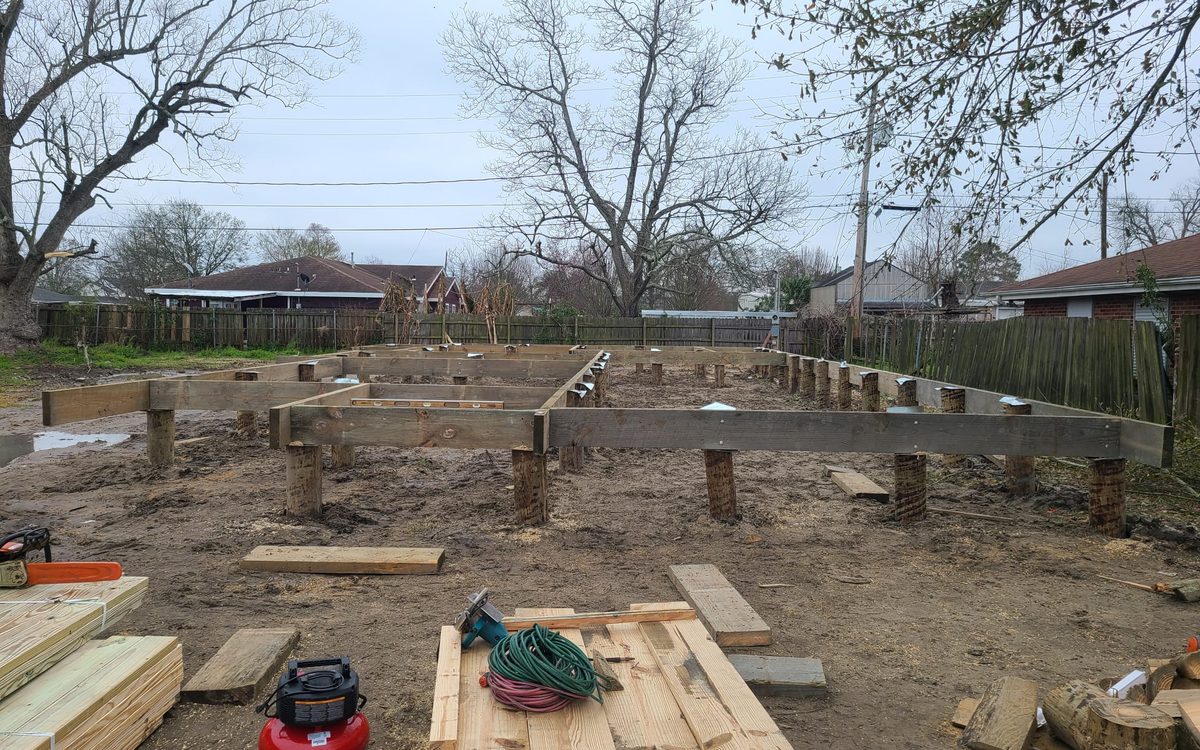
Foundations
Slab and pier-and-beam foundations, re-leveling and structural repairs designed around local clay and water conditions.
View foundations
Written by the Oliver Nola team
A Metairie construction and renovation company with more than 25 years of experience in new homes, foundations, roofing, siding, concrete and remodeling across the New Orleans area.